
Wards of Newark: Manuel Acevedo

Manuel Acevedo, BMX Crew (After the Puerto Rican Day Parade), 1986, Courtesy of the artist.
New Arts, a public art studio at Rutgers University-Newark led by Dr. Salamishah Tillet, is pleased to present"The Wards of Newark: Manuel Acevedo," a citywide public exhibition featuring black-and-white works by Newark-born, multidisciplinary artist Manuel Acevedo.
Hosted as a partnership between Rutgers University-Newark and the City of Newark and curated by Professor Salamishah Tillet, Director of New Arts at Express Newark, “Wards of Newark” draws from an archive of over 3,200 black and white images by Acevedo, most of which have never been shared with the public, and features large-scale billboards and murals at key sites in the city: Branch Brook Park, Riverfront Park on Raymond’s Boulevard, Halsey Street/Rutgers University—Newark, South Stage Park at Clinton Avenue, and South Orange Avenue. The exhibition is a culmination of Acevedo’s residency with New Arts hosted at Express Newark.
On Tuesday, May 12th at 5:30pm, New Arts will host the opening program for Wards of Newark: Manuel Acevedo, a citywide public art exhibition featuring archival photographs of Newark, taken from 1982 to 1987, by the multidisciplinary artist Manuel Acevedo. Located across the five wards, Central, North, East, West, and South, the images reflect the city’s past vitality and current diversity, inviting viewers to remember Newark as a place of home, community, and cosmopolitanism.
“Wards of Newark: Manuel Acevedo” features large-scale billboards and murals at key sites in the city:
West Ward: Former Pabst Blue Ribbon Brewery, 588 South Orange Ave
South Ward: Soundstage Park, 450 Clinton Ave
Central Ward: Rutgers University/Halsey Street, 5 Linden Street
North Ward: Essex County Branch Brook Park (Near the Roller-Skating Rink)
East Ward: Riverfront Park, 871 Raymond Blvd
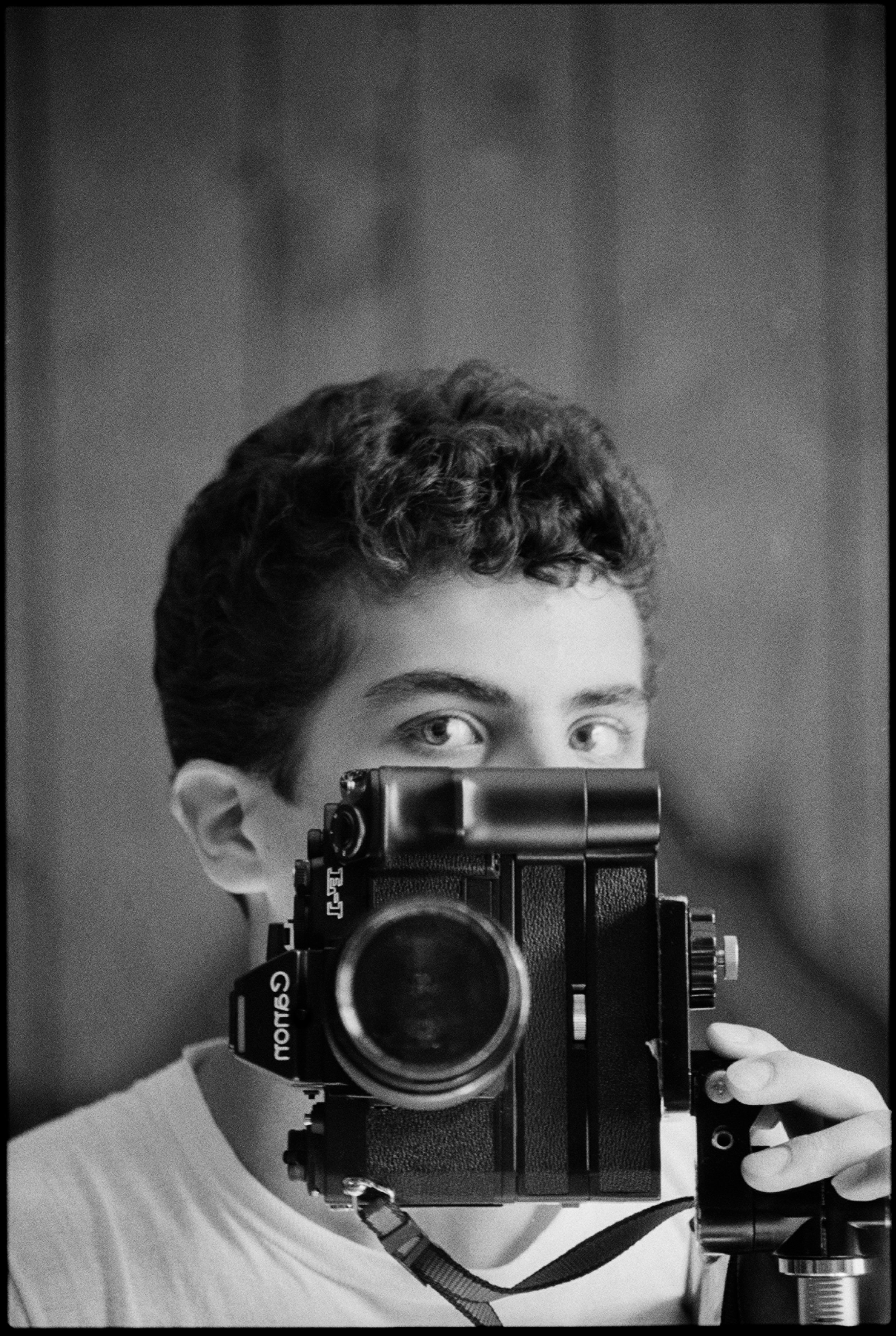
Manuel Acevedo, Self-Reflection, 1982, Courtesy of the Artist.
Taking his first photograph for the series at age 18, Acevedo grew up in a Puerto Rican household in the West Ward and spent his childhood in one of the most racially and ethnically integrated areas of the city. Among the over 275 rolls of 35mm film developed for this project were the promise of Acevdeo’s prodigy and the beginnings of his social practice.
His is a singular aesthetic, one that captured the warmth, connection, and vibrancy of Newark during a time when its dominant media narratives were suburban flight, crime, and decay. Through his unique blend of portraiture, documentary, and street photography, he told the story of daily life here as he lived it: rallies, birthday parties, parades, fashion shows, political campaigns, religious rituals, graffiti writing, and voguing and breakdancing.
Acevedo’s images captured a city in motion, as it underwent rapid transformation driven by immigration, post-industrialization, and the rise of hip-hop culture. The nostalgia of his images invites viewers to remember Newark as a place of home, community, and cosmopolitanism. But the "Wards of Newark” is also a novel take on the city, with its photographic routes dissolving the longstanding demographic and geographic differences that continue to divide Newark today.
Each selected image demonstrates Acevedo’s belief in the people of Newark, where their unique subjectivities and urban sensibilities are at the cultural forefront. To mirror his visual achievement, the photographs are presented as large-scale billboards and murals at key sites in the city: Branch Brook Park, Riverfront Park on Raymond’s Boulevard, Halsey Street/Rutgers University—Newark, South Stage Park at Clinton Avenue, and South Orange Avenue.
Exhibition Sites
West Ward
Former Pabst Blue Ribbon Brewery
588 South Orange Ave, Newark, NJ 07106
Beginning in the Acevedo’s neighborhood of the West Ward, the photos Monk Picking Flowers (1986) and Composition at House No. 360 (1982) are situated at the intersection of South Orange Avenue and Grove Street, one of the city’s busiest corridors. Located at the former Pabst Blue Ribbon brewery, which operated for 40 years before closing in 1986, the site is a remnant of Newark’s industrial past, and even in the building's absence, it continues to shape the neighborhoods that surround it. In contrast, the pairing of Acevedo’s images brings the complexities of domestic life outdoors, creating landscapes that reflect the carefree yet contained nature of childhood and communal life, rendered through an urban, highly expressive visual language that honors the energy and diversity of his childhood communities.
Central Ward
Halsey Street/Rutgers University
5 Linden Street, Newark, NJ 07102
The Central Ward contains the city’s main civic, university, and commercial institutions. Downtown spaces, including Military Park and Lincoln Park, have long served as central meeting grounds for festivals, protests, and parades like the Puerto Rican Day Parade, filling the streets of Newark with music, movement, and community pride. In BMX Crew (after the Puerto Rican Day Parade) (1986), Acevedo captures a group of young riders navigating the city together, offering a portrait of Black and Latino boyhood shaped by friendship, independence, and shared public space.
East Ward
Riverfront Park
871 Raymond Blvd, Newark, NJ 07105
Located in Riverfront Park, the installation considers the waves of immigration, migration, and dynamic exchange that have shaped the East Ward, and Newark’s evolving demographic landscapes, from the original Lenape inhabitants, to the arrival of Italian, Irish, Portuguese immigrants, and African American migrants in the mid-twentieth century, to the recent influx of communities from the Caribbean, Central, and South America.
The placement of the images creates distinct sightlines along Raymond Boulevard: the river, the stadium, the train line, and the public park. Facing Newark Penn Station, Continental on Brookdale Ave (1983) is one of the few landscape images featured, in which Acevedo reimagines the 1960 Lincoln Continental Mark V car as an urban still-life, allowing it to stand out and conjure the rhythms of travel and daily migration. On the opposite side, Embrace (1986), a portrait of two young girls, looks upon the Ironbound section of Newark, invoking a sense of home and comfort within a constantly moving landscape.
South Ward
Soundstage Park
450 Clinton Ave, Newark, NJ 07112
From theater stages to public murals, the South Ward reflects a long tradition of cultural expression and its influence on the neighborhood’s identity. Enriched by legacy cultural sites such as Kimako’s Blue People, founded in the basement of Amiri and Amina Baraka’s home, and by wall and current street murals commissioned by the City of Newark, the South Ward is a place shaped by music, audience, and artistic freedom. One of Acevedo’s later images, Holding Court (Sub-stage at the People’s Festival) (1987), echoes this artistic ethos, depicting a group of young men gathered beneath a stage at a public hip-hop event. Exhibited in Soundstage Park on Clinton Avenue, the artwork underscores the South Ward’s enduring role as a place to showcase and gather around shared cultural life.
North Ward
Branch Brook Park
Near the Rollerskating Rink, Newark, NJ 07104
The North Ward is home to Branch Brook Park, the first county park in the United States, designed by renowned landscape architect Frederick Law Olmsted, and opened in 1895. Hosting the annual Cherry Blossom Festival each April, it continues to serve as a shared space for residents across the city and Essex County, reflecting the North Ward’s long tradition of urban leisure and public gatherings. The photographs Parade Day (1987) and Looking Out (1982) both feature young children and are located directly on the historic park grounds, across from the skating rink, highlighting Branch Brook’s legacy as a site of cultural gatherings, play, and family celebrations.
Wards of Newark is curated by Dr. Salamishah Tillet, Distinguished Professor of Africana Studies and Creative Writing and New Arts Faculty Director at Rutgers University—Newark, and features works by Manuel Acevedo, New Arts Artist-in-Residence at Express Newark. Additional support is provided by fayemi shakur, Director of Newark’s Department of Arts and Cultural Affairs, and Rebecca Jampol, Public Arts Manager and Co-Director of Project for Empty Space.
The exhibition is presented by Rutgers University—Newark, in partnership with Newark’s Department of Arts and Cultural Affairs. Additionally, the Ford Foundation, Emerson Collective, and A Long Walk Home have provided generous support for this exhibition.
We extend our sincere gratitude to the many partners, collaborators, and community members whose expertise, care, and dedication made Wards of Newark possible, including:
Branch Brook Park Alliance
Crown Bank
Essex County Department of Parks
The Hanini Group
The Honors Living-Learning Community at Rutgers University—Newark
Newark City Parks Foundation, Inc.
Oak Ridge, LLC
The Department of Recreation, Cultural Affairs & Senior Services
Additional Credits
Alliyah Allen, Project Manager
Adrienne Wheeler, Curator of Engagement
Ben Volta, Mural Provisions
Brian Boyajian, Duggal Visual Solutions
Brooke Finister, New Arts Program Coordinator and Artist Liaison
Connie Harvey, Graphic Designer
Mashell Black and Kamil Policht, Paint Design, LLC, Preparators
Paul Farber, Aubree Penney, and Isabel Oberlender, Monument Lab, Curatorial Advisors
